

By Dickson Bandera
A community development trust in Southerton, Harare has partnered with the Government to preserve and restore heritage sites linked to Zimbabwe’s liberation history, beginning with a historic police station in Highfield that once held nationalist activists detained by the colonial authorities.
The Southerton Constituency Community Development Trust (SCDT) is working with Government authorities on the rehabilitation and maintenance of heritage sites, in an initiative aimed at ensuring that places associated with Zimbabwe’s past are preserved for present and future generations.
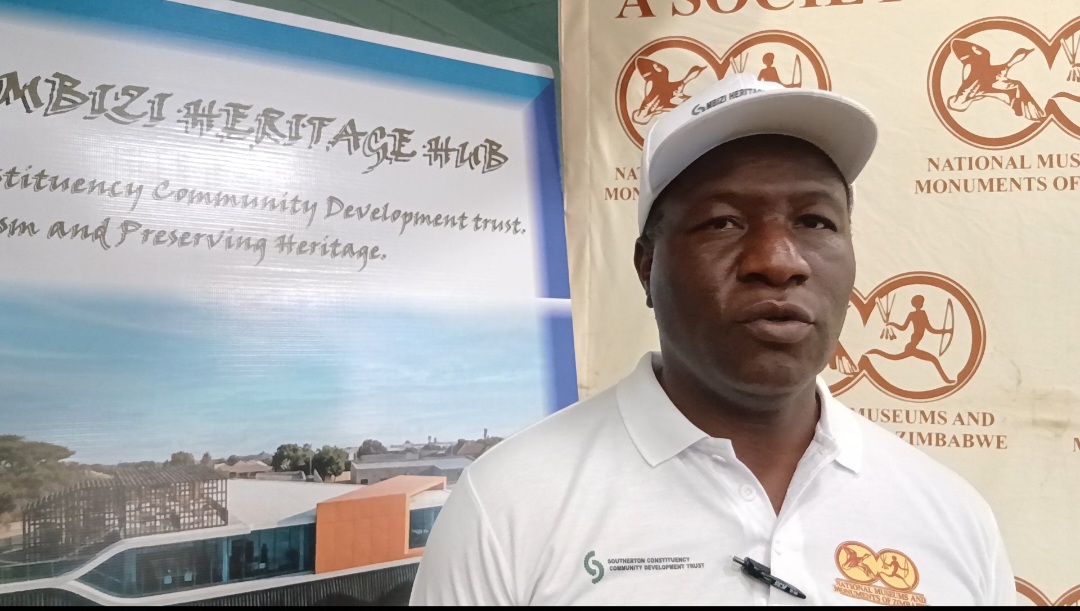
One of the key sites under the programme is Mbizi Police Post in Highfield, where the Trust is supporting efforts to rehabilitate and modernise the facility into Mbizi Tourism Hub, while retaining its historical character.
Mbizi is significant because of its association with the colonial government’s detention of African nationalists during the struggle against colonial rule. The original detention cells remain standing, offering a physical connection to a period when nationalist activists were arrested and held by the colonial security authorities.
Highfield and the liberation struggle
The preservation of Mbizi takes on added significance because of Highfield’s central role in Zimbabwe’s liberation history.
Established during the colonial period as an African township, Highfield developed into one of the major centres of African political mobilisation in what was then Southern Rhodesia. The suburb became a meeting place for nationalist leaders and ordinary residents involved in the struggle for majority rule.
The township was closely associated with the rise of African nationalist politics in the 1950s and 1960s. The National Democratic Party, which succeeded the banned African National Congress, was launched in Highfield in 1960.
Highfield later became even more prominent in the history of the liberation movement. ZANU was formed in the suburb on August 8, 1963, following a split within the nationalist movement. The meeting was held at the home of nationalist politician Enos Nkala.
The suburb therefore became both a centre of nationalist mobilisation and a target of the colonial security system.
Against that backdrop, Mbizi Police Station represents an important part of the story. While Highfield outside the station was becoming a centre of political organisation, people involved in the nationalist movement could find themselves arrested and detained inside its cells.
Historical accounts associate Mbizi with the detention of prominent nationalists, including Robert Mugabe, Enos Nkala, Leopold Takawira and Herbert Chitepo.
The surviving cells are consequently more than old structures. They provide a tangible reminder of the repression faced by nationalists during the struggle for Zimbabwe’s independence.
From detention centre to tourism attraction
The proposed restoration could also give Mbizi a new role in Zimbabwe’s tourism industry by developing it as a liberation heritage tourism attraction.
Zimbabwe’s tourism brand is internationally associated with destinations such as Victoria Falls, Hwange, Great Zimbabwe, Matopo Hills, and Mana Pools, but the country also has a rich history of resistance, nationalism and liberation that offers opportunities for cultural and heritage tourism.
Mbizi could become part of that offering because visitors would be able to experience a physical site connected to Zimbabwe’s political history rather than simply reading about the liberation struggle in books.
Its location in Highfield provides an even greater opportunity. Instead of treating Mbizi as an isolated heritage site, authorities and tourism stakeholders could explore the development of a Highfield Liberation Heritage Trail, linking Mbizi with other historically important locations in the suburb and wider Harare.
Such a trail could tell the story of the growth of African nationalism, the formation of political movements, colonial repression and the long struggle that culminated in Zimbabwe’s independence in 1980.
The attraction could cater for both domestic and international tourism. Schools and universities could use the site for educational visits, while Zimbabweans living abroad could have an opportunity to connect with the country’s history. International visitors interested in African history, liberation movements and post-colonial societies could also be offered a different dimension of Zimbabwe beyond its wildlife and natural attractions.
Properly developed, the site could incorporate historical interpretation panels, archival photographs, oral histories, guided tours and educational exhibitions, subject to the requirements of the National Museums and Monuments of Zimbabwe (NMMZ).
The project could also create opportunities for local tour guides, transport operators, restaurants, craft producers and other small businesses in Highfield and surrounding communities.
For tourism, the significance is therefore not simply the preservation of an old police station. It is the possibility of turning a place once associated with colonial repression into a centre for historical education, remembrance and community-based tourism.
Preserving history for future generations
Hon. Andrew Makahamadze said the restoration initiative would help ensure that such sites were not lost through neglect and that their stories remained accessible to future generations.
The project also reflects an effort to bring communities into the preservation of national heritage, particularly sites located within urban communities where major events in Zimbabwe’s history unfolded.
Mbizi Police Station is recognised as a monument under the National Museums and Monuments of Zimbabwe.
For Highfield, the proposed rehabilitation could give new life to a site that once symbolised colonial control, transforming it into a place where residents, students, researchers and visitors can learn about Zimbabwe’s journey from colonial rule to independence.
If successfully developed, the project could demonstrate that Zimbabwe’s tourism potential extends beyond wildlife and scenic landscapes. The country’s history is itself a tourism resource, and Highfield is one of the places where that history can be experienced.