

By Dickson Bandera
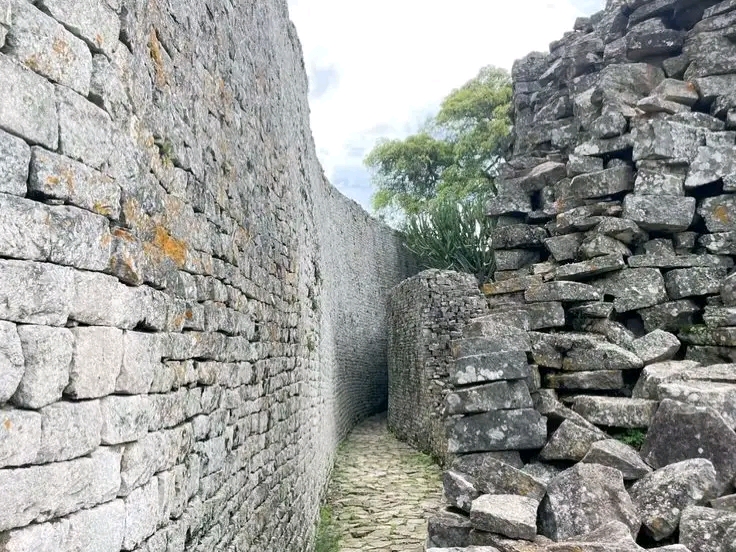
MASVINGO, Zimbabwe — Set among granite hills about 30 kilometres from Masvingo, Great Zimbabwe is one of Africa’s most remarkable archaeological sites — an ancient stone city whose massive dry-stone walls offer visitors a glimpse into the power and sophistication of a medieval African civilisation.
The UNESCO World Heritage site covers almost 800 hectares and was built between about 1100 and 1450 AD by ancestors of Zimbabwe’s Shona people. At its peak, the settlement is believed to have supported more than 10,000 people.
For first-time visitors, the main attraction is the architecture.
The site is divided into three principal areas: the Hill Ruins, the Great Enclosure and the Valley Ruins. The Hill Ruins sit among granite boulders above the surrounding landscape, while the Great Enclosure is dominated by a huge curved stone wall and its famous Conical Tower. The walls were constructed without mortar, using carefully laid granite blocks.
The experience is largely about walking, exploring and taking in the scale of the ruins. Comfortable shoes, water, sun protection and sufficient time are advisable, particularly for visitors intending to explore the hill section.
Beyond the stonework, Great Zimbabwe tells a story of a society that farmed, kept livestock, worked iron, gold and copper, produced crafts and participated in long-distance trade. Archaeologists have found imported glass beads and ceramics, evidence of connections extending towards the Indian Ocean trading world.
Visitors can also encounter contemporary Shona culture at the traditional village, where activities including sculpture and basketry complement the archaeological experience. Accommodation and camping facilities are available in the wider site area.
Great Zimbabwe is not a conventional museum where exhibits are concentrated in galleries. Its greatest exhibits are the ruins themselves, spread across a large landscape. Visitors should therefore expect an outdoor heritage experience rather than a quick stop.
The monument is also an important place in understanding Zimbabwe itself. Its name is linked to the country’s identity, while its recognition as a World Heritage site in 1986 places it among the continent’s internationally significant cultural landmarks.
For travellers interested in archaeology, African history, architecture, photography or culture, Great Zimbabwe offers the opportunity to walk through the remains of a major African city that flourished centuries before the modern state of Zimbabwe existed.