

By Staff Reporter
HARARE — For years, Victoria Falls has been the unmistakable face of Zimbabwe on the international tourism map — a spectacular gateway that has drawn visitors from across the world to the country.
But Zimbabwe is now asking the European travel market to look beyond the waterfall.
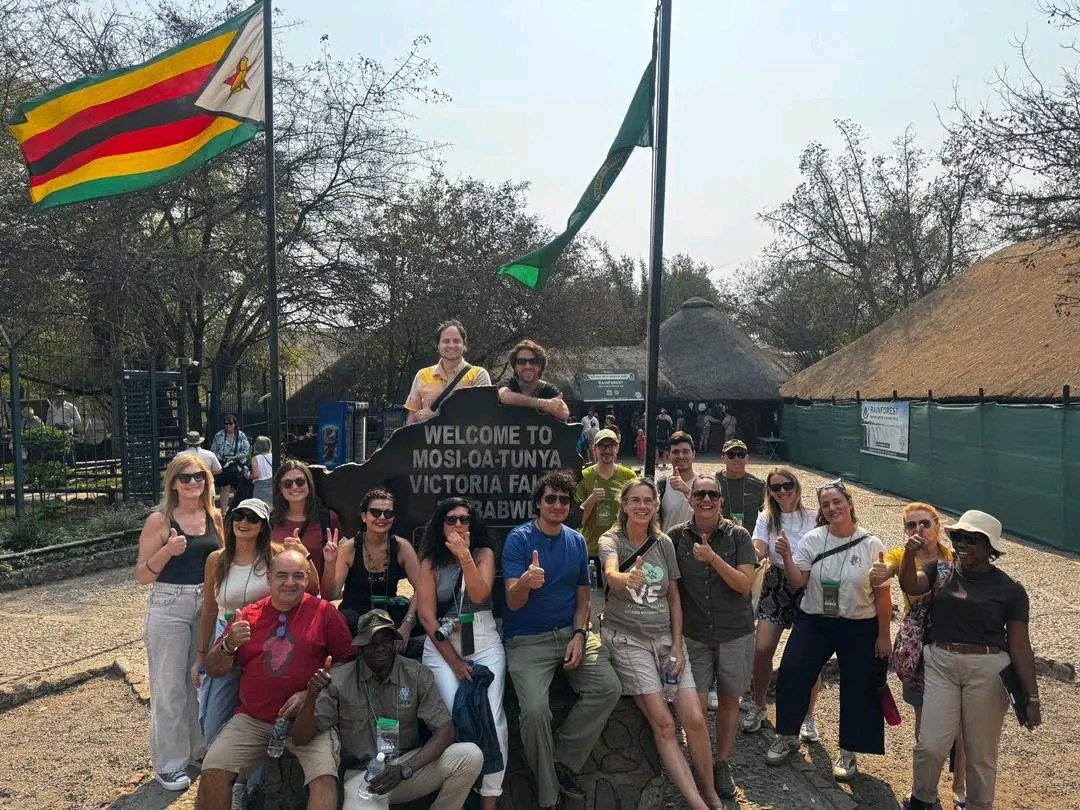
As the country counts down to the 19th edition of the Sanganai/Hlanganani/Dzimbahwe Tourism Expo in Masvingo, 18 tourism agencies from Germany, France, Portugal and Spain are undertaking a 12-day familiarisation tour that takes them across some of Zimbabwe’s most significant natural, cultural, historical and wildlife destinations.
The itinerary — covering Harare, Great Zimbabwe, Gonarezhou, Matobo, Hwange and Victoria Falls — is more than a sightseeing exercise.
It is part of a deliberate attempt to change the way Zimbabwe is packaged and sold in European markets: from a destination built around a single world-famous attraction into a country capable of sustaining extended, multi-destination journeys.
The Zimbabwe Tourism Authority (ZTA) says the programme is designed to give tourism professionals first-hand exposure to the depth and diversity of Destination Zimbabwe, enabling them to develop packages that connect several destinations rather than concentrating demand around Victoria Falls.
That shift could prove significant for a country seeking to increase tourist spending, lengthen visitor stays and ensure that the economic benefits of tourism reach communities far beyond the traditional tourism gateways.
Selling the journey, not just the destination
The importance of the European travel agencies lies in their position between Zimbabwe’s tourism products and the international consumer.
A traveller sitting in Berlin, Paris, Madrid or Lisbon may never have heard of Gonarezhou, explored the granite landscapes of Matobo or stood among the ruins of Great Zimbabwe.
But the travel professional designing that traveller’s holiday can determine whether those places become part of the itinerary.
This is why familiarisation tours remain an important component of destination marketing.
When tourism professionals physically experience a destination, they are better placed to assess accommodation, attractions, transport connections, activities and the overall quality of the visitor experience — information that can subsequently influence how a destination is presented to potential travellers.
The ZTA says the current European market is increasingly seeing Zimbabwe packaged into itineraries lasting between nine and 21 days, a development it regards as a sign of growing confidence in the destination.
For Zimbabwe, the opportunity is therefore not simply to attract more tourists.
It is to persuade visitors to stay longer, travel farther and spend more widely.
A tourist who spends several days moving through different parts of Zimbabwe potentially generates economic activity across accommodation establishments, restaurants, transport operators, guides, curio traders, community enterprises, conservation initiatives and other businesses along the tourism value chain.
That is the wider economic logic behind destination diversification.
From Victoria Falls to Great Zimbabwe
The timing of the familiarisation programme is particularly significant because this year’s Sanganai/Hlanganani/Dzimbahwe Tourism Expo is being hosted in Masvingo, home to the Great Zimbabwe Monument.
The ancient stone city gives the expo a distinctive heritage dimension while placing one of Zimbabwe’s most important historical assets at the centre of the country’s international tourism conversation.
The decision to host the expo in Masvingo also continues the rotational approach that took the country’s flagship tourism trade event to Manicaland last year.
The underlying message is becoming increasingly clear: Zimbabwe’s tourism story cannot be told adequately from one province, one attraction or one tourism corridor.
The country has wildlife landscapes in Hwange and Gonarezhou, dramatic scenery in Matobo, the monumental heritage of Great Zimbabwe, the cultural and urban experiences of Harare and the natural spectacle of Victoria Falls.
The challenge is connecting these experiences into commercially viable journeys.
That is where the European buyers become important.
A tourism economy that must spread
Zimbabwe’s tourism ambitions come at a time when Sanganai/Hlanganani itself is recording increased international participation.
Tourism and Hospitality Industry Minister Barbara Rwodzi said 392 companies had registered for this year’s expo against a target of 400, representing 98 percent of the target and a 14.3 percent increase from the 343 exhibitors recorded last year.
International buyer participation has also risen sharply, with 133 buyers confirmed compared with 89 last year — a 49.4 percent increase.
The figures provide an important backdrop to the European familiarisation programme.
They suggest that Zimbabwe is attempting to move beyond simply promoting its attractions and is placing greater emphasis on connecting its tourism products with the people who can take those products into international markets.
The expo itself is scheduled for September 9–12 in Masvingo, with the programme incorporating tourism business networking, investment activities, gastronomy, MICE, cultural activities and familiarisation tours.
This is essentially a shift from tourism promotion to tourism conversion — turning visibility into bookings, bookings into longer stays and longer stays into greater economic value.
The value of dispersal
For communities located away from Victoria Falls, the stakes are considerable.
Tourism dispersal can create markets for accommodation establishments, restaurants, transport operators, artisans, guides and community-based tourism enterprises that may otherwise struggle to access international visitors.
It can also encourage investment in destinations that have strong tourism assets but remain comparatively underexposed internationally.
The European familiarisation tour therefore places lesser-explored destinations directly before professionals capable of incorporating them into international travel programmes.
That could help address one of the perennial challenges facing destination Zimbabwe: having a rich tourism product but ensuring that the international market understands the full breadth of what the country offers.
The strategy also fits into the broader infrastructure and destination-development push accompanying this year’s expo.
Preparations in Masvingo have included the refurbishment of Masvingo Airport, road improvements and upgrades to facilities at the Gymkhana Events and Conference Centre.
These investments matter because tourism marketing cannot operate in isolation from the visitor experience.
A destination may possess extraordinary wildlife, heritage and cultural assets, but converting those assets into sustained tourism demand requires connectivity, accommodation, transport, information, service quality and reliable access.
Turning confidence into commerce
The real test of the 12-day tour will begin after the European agencies leave Zimbabwe.
The measure of success will not simply be photographs taken at Great Zimbabwe or game drives in Gonarezhou.
It will be whether the experiences translate into new itineraries, stronger destination visibility, more bookings and increased visitor flows into parts of Zimbabwe that have historically received fewer international tourists.
That is why the ZTA’s emphasis on first-hand experience is important.
Tourism professionals who understand a destination from personal experience can market it with greater confidence and authenticity, according to the authority.
For Zimbabwe, that confidence is potentially valuable currency.
The country is competing in a crowded global tourism marketplace where travellers have numerous destinations from which to choose.
Its advantage lies not in trying to imitate another destination, but in assembling its own distinctive proposition — wildlife, heritage, culture, landscapes, adventure and hospitality — into journeys that give international visitors compelling reasons to remain in the country for longer.
A bigger Zimbabwe story
The significance of the European familiarisation tour ultimately goes beyond the 18 agencies involved.
It represents an attempt to influence the narrative through which Zimbabwe is consumed by the international tourism market.
Victoria Falls remains indispensable to that narrative. But Zimbabwe wants it to become a gateway rather than the full stop.
From the stone walls of Great Zimbabwe to the wilderness of Gonarezhou; from the granite formations of Matobo to Hwange’s wildlife landscapes; and from the country’s urban and cultural experiences to the majesty of Victoria Falls, the proposition being placed before European tourism professionals is that Zimbabwe is not one attraction.
It is a journey.
And if that journey can be successfully packaged, sold and experienced over nine, 14 or even 21 days, the benefits could extend well beyond the tourism industry itself — spreading spending, supporting local businesses, creating employment and placing more communities within the orbit of Zimbabwe’s growing tourism economy.
As Sanganai/Hlanganani/Dzimbahwe opens its doors in Masvingo, therefore, the country’s tourism pitch to Europe is becoming more ambitious.